Why CPR education, first aid skills, AED access and shared readiness matter before an emergency begins
Care can begin before help arrives
In an emergency, the first person able to help is often not a clinician. It may be a coworker, coach, teacher, family member or stranger nearby. That person does not need to diagnose the problem. They need to recognize that something is seriously wrong, call 911 and take safe action while professional help is on the way.
This is where community education becomes part of the healthcare system. CPR and first aid training help people move from uncertainty to action. Public access to automated external defibrillators places an important tool closer to the moments when it may be needed.
Confidence comes from practice
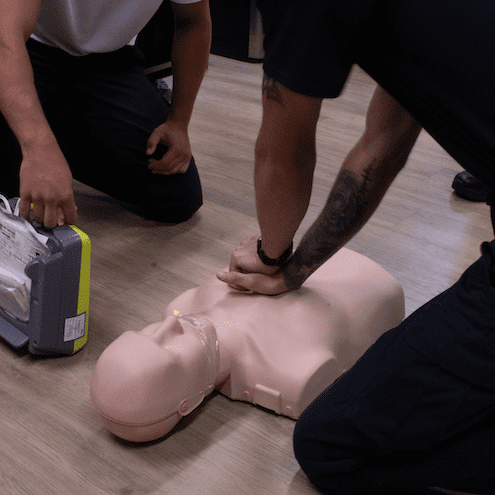
Reading about CPR is not the same as practicing it. A class gives participants the opportunity to learn hand placement, compression technique, how to respond to instructions and how an AED guides a rescuer through each step. First aid education can also help people respond to bleeding, injuries and other common emergencies while avoiding actions that could cause harm.
Training does not remove every fear. It gives people a simple framework to follow under stress. That confidence can shorten the time between recognizing an emergency and beginning appropriate care.
AED access is only useful when people know it is there
An AED is designed to analyze a person’s heart rhythm and deliver a shock only when appropriate. The device provides spoken or visual directions, but preparedness still matters. Organizations should know where their AED is located, make it easy to reach, check it routinely and ensure staff or volunteers understand the response plan.
Oxford’s community AED placement initiative extends lifesaving equipment into nonprofit, faith-based and community settings. The program recognizes a simple reality: placing resources throughout the city can strengthen the chain of survival, especially when equipment is paired with education and a clear plan.
Preparedness belongs in everyday places
Health emergencies do not happen only in hospitals or clinics. They happen at ballfields, offices, churches, schools, neighborhood events and homes. Community organizations can prepare by identifying the exact address responders will need, keeping entrances accessible, assigning someone to meet the ambulance and making sure emergency information is current.
Families can take similar steps. Keep an updated medication list and key medical history in a place that is easy to find. Make sure children and caregivers know how to call 911 and state the address. Talk through the plan without using fear. The goal is calm familiarity, not alarm.
Preparedness also means showing up for one another
Community health grows through participation. Someone takes a CPR class. An organization agrees to maintain an AED. A volunteer donates blood. A business supports a safety event. A resident shares reliable information with a neighbor.
Each action may feel small on its own. Together, they create a community that is better equipped to respond, recover and care for people at vulnerable moments. Partnerships with organizations such as LifeSouth also connect local generosity to the blood supply that supports hospitals and advanced prehospital care.
Professional response and community readiness work together
Oxford Health Systems Paramedic Service brings advanced clinicians, equipment and medical oversight to emergencies across the community. Community members do not replace that care. They help bridge the first minutes until it arrives.
That partnership is the larger purpose of community health education: give people safe, practical ways to help; ensure professional responders can take over quickly; and build trust before an emergency ever happens. A prepared community is not one that expects the worst. It is one that understands caring for neighbors is a shared responsibility.